
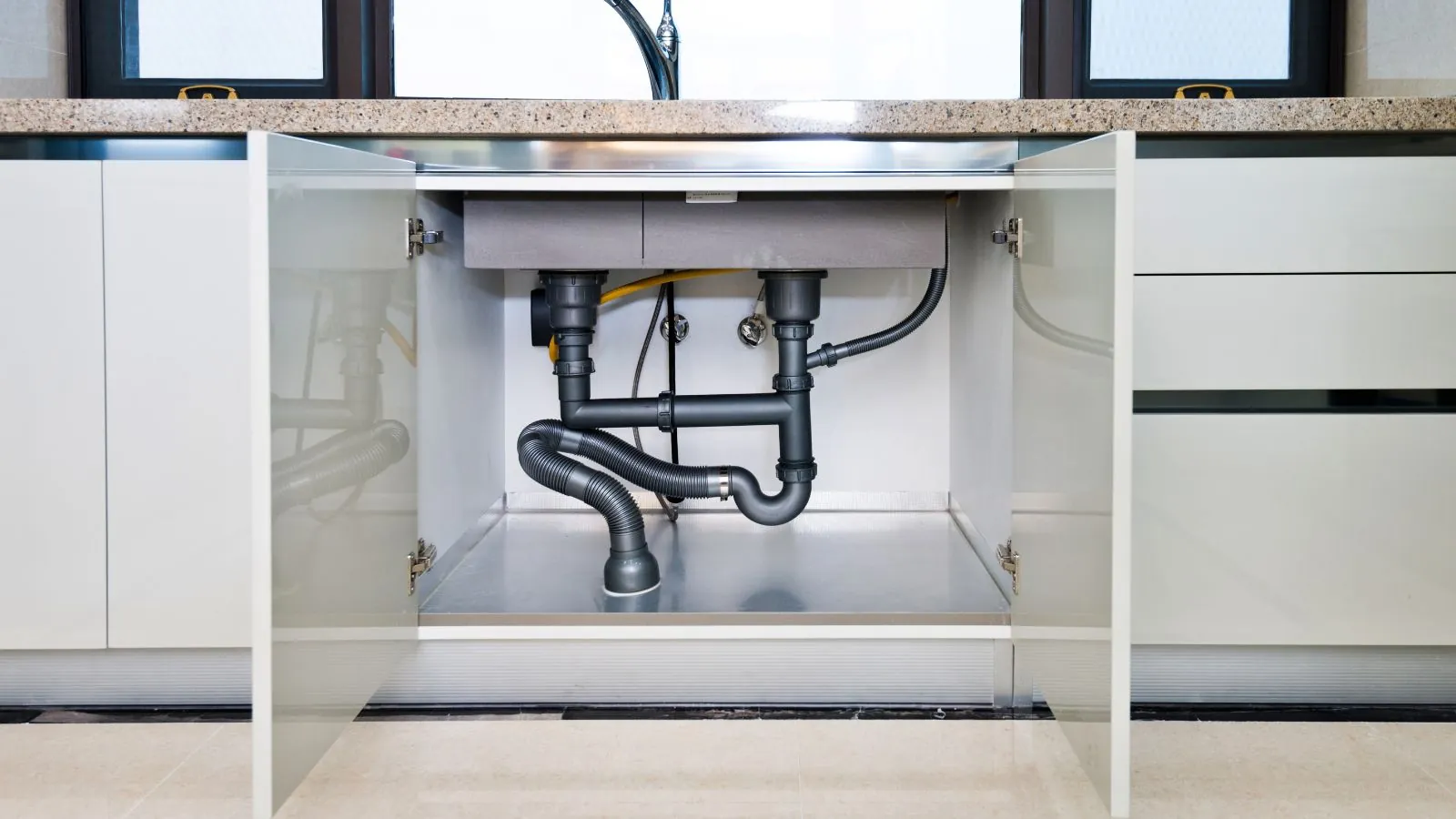
Emergency appliance leak water damage in Rockville Centre usually comes from a dishwasher, washing machine, refrigerator ice line or a sink supply hose. The water often runs under cabinets and flooring, where you cannot see it.
Turn off the appliance, close its supply valve and unplug it only if the outlet is dry. Then call our 24/7 line for extraction and drying.
When an appliance leak is an emergency
A washing machine hose that fails can release gallons per minute. A dishwasher leak is slower, but it runs under cabinets and into the subfloor for hours.
A refrigerator ice maker line can leak for weeks behind the unit before a stain shows. If the floor near a fridge feels soft, treat it as an active leak.
Safety first: do not touch an appliance that is plugged in while you stand in water. Turn off the breaker for the circuit only if you can reach the panel dry, and call 911 for any sparking.
Hidden water under cabinets and floors
Cabinet bases, toe-kicks and laminate flooring act like sponges. Water wicks into particleboard, which swells and does not return to its shape.
A thermal camera shows cool, wet zones behind kickplates, and a moisture meter confirms them. That decides whether the floor can be dried in place or has to be lifted.
Appliance still leaking? Close the supply valve and call. Call (516) 845-9582
How we handle it
- Extract standing water and pull the appliance away if it is safe.
- Lift loose flooring and remove the toe-kick to reach the cavity.
- Dry the subfloor and cabinet bases with directed air.
- Replace materials that will not recover, such as swollen particleboard.
- Check readings before any new flooring goes down.
A kitchen with a wide area of damage follows the same steps as kitchen water damage restoration, and an upstairs laundry leak that came through a ceiling is covered under ceiling water damage repair.
Appliance leaks in Rockville Centre
Rockville Centre has a high rate of owner-occupied housing, with 74.5 percent of households owning their homes according to the Census Bureau. Owners who live with a slow leak for months can face a claim denial, so check hoses and drain lines every year.
Braided steel supply hoses last longer than rubber ones, but both age. Replace any hose that is bulging, rusted at the fittings or more than a few years old.
What affects the cost
| Factor | Effect |
|---|---|
| How long it leaked | A quick catch stays on the surface and a slow leak soaks the subfloor. |
| Flooring | Vinyl, laminate and wood each react differently. |
| Cabinet damage | Swollen cabinet bases usually need replacing. |
| Area | A single room costs less than adjoining spaces. |
| Drying time | More wet material means more days of equipment. |
Many policies cover a sudden appliance failure but not one that leaked unnoticed for months. Photograph the area and keep the appliance, if possible. Want your real number? Call (516) 845-9582.
Where appliance leaks hide
Appliance leaks are often slow, which is why they cause so much hidden harm. A dishwasher door gasket, a washing machine drain hose and a refrigerator ice maker line can all drip for weeks behind a panel or under a floor.
Clues include a soft spot in the floor near the appliance, a musty smell in the cabinet, cupped flooring and a stain on the ceiling below. When you see one, pull the appliance out if it is safe and look at the wall behind and the floor under it.
Shut off the supply valve before moving anything, and unplug the unit if the floor is wet. Photograph what you find before cleanup.
Questions about appliance leak water damage in Rockville Centre
Yes. Our line is answered 24/7 and we aim for same-day response when a crew is available.
Washing machines, dishwashers, refrigerators with ice makers and water heaters. Supply hoses and drain lines are the weak points.
Often it can if the water is caught early. Laminate and engineered wood are more likely to need replacement than tile.
Sometimes. Pulling it out lets us reach the floor and wall behind it, but only do it if the area is safe and dry enough to touch.
Sudden failures are often covered, and slow leaks often are not. Check your policy and document the damage.
Look for dampness around the valves, drips under the machine and bulges or cracks in the hose. Replace old rubber hoses before they fail.