
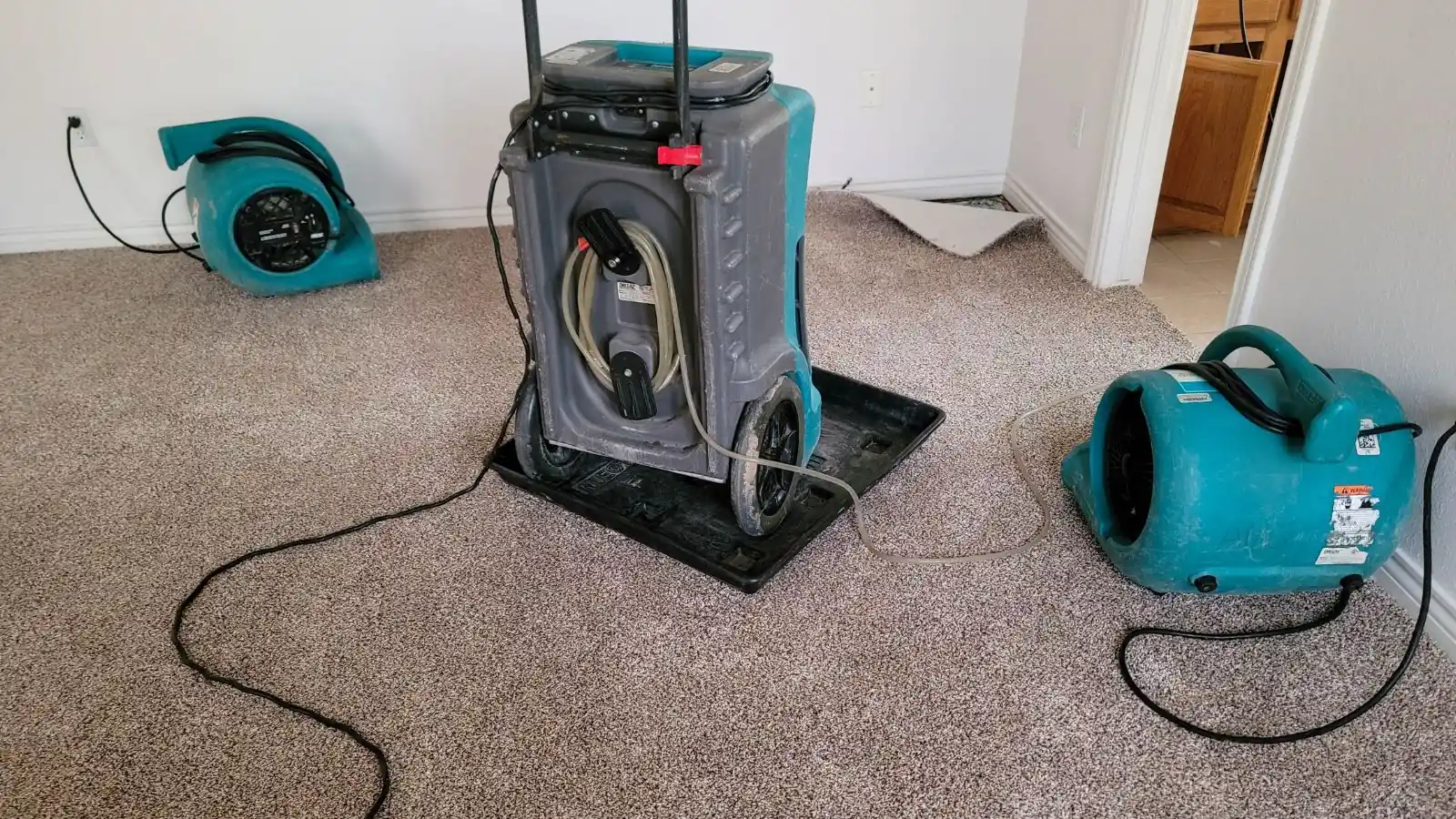
Structural drying and dehumidification in Rockville Centre is for the moisture you cannot mop up. After a leak, water sits inside drywall, framing, subfloor and insulation. Fans and open windows move air across the surface but rarely reach it.
Our approach uses meters to map the water, then air movers and dehumidifiers to pull it out. Call the 24/7 line if the house still smells damp or the readings have not come down.
Signs the structure is still wet
A musty odor, paint that bubbles again, baseboards that swell, floors that cup and walls that feel cool or damp are signs. So is a window that fogs more than before the leak.
These signs can show up days after a leak seems to be over. Wood and drywall hold water, and a surface that looks dry can still read high in the middle.
How drying works
Drying is a controlled process. Air movers push dry air across surfaces, dehumidifiers pull water vapor out of the air and heat or ventilation helps release moisture from materials.
Low grain refrigerant dehumidifiers, or LGR units, work well in humid conditions, and desiccant units are used in cold or very damp spaces. The right mix depends on the room and the materials.
| Equipment | What it does |
|---|---|
| Air movers | Push air across wet surfaces to release moisture. |
| LGR dehumidifier | Removes water vapor from the air in warm, humid rooms. |
| Desiccant dehumidifier | Works in cold or very damp conditions. |
| Moisture meter | Reads the wetness inside wood, drywall and slab. |
| Thermal camera | Shows cool, wet areas behind finished surfaces. |
Damp smell that will not leave? Call and we will explain how drying works. Call (516) 845-9582
What the process looks like
- We take baseline readings in wet and dry areas.
- We set equipment based on the room and the materials.
- We return to take readings and adjust the setup.
- We pull equipment only when readings reach a dry standard.
- We give you a record of the readings.
Drying usually follows water extraction and sits behind most jobs on this site. A drying plan also covers hidden pockets, like a wet wall base that surface checks missed.
Drying in Rockville Centre homes
Many older houses have plaster walls, hardwood floors and finished basements. Those materials dry slowly, so a plaster wall may need longer than a drywall wall with the same wetting.
A finished basement near the village, in a house with a sump pump, can stay damp for weeks after a storm. If yours smells musty, a moisture check before the carpet goes back is a good step, and mold remediation explains what New York requires if growth appears.
What affects the cost
| Factor | Effect |
|---|---|
| Wet area | More area means more equipment. |
| Materials | Plaster and hardwood dry slowly. |
| Drying days | Each day equipment runs adds cost. |
| Water category | Dirty water adds cleaning steps. |
| Monitoring | Return visits are part of the process. |
Coverage depends on the cause of the water, not on the drying itself. Check your policy. Want your real number? Call (516) 845-9582.
How drying is measured
Drying is a measurement job. A crew records temperature and humidity in the room and moisture content in walls and floors. Those readings go on a log each day.
The aim is to bring wet materials down to a dry standard, which is set by comparing them with unaffected materials in the same house. When the readings match, equipment can be removed.
If readings stall, the crew adjusts. They may move air movers, add dehumidifiers or open a cavity to reach trapped moisture.
Safety steps before help arrives
- Stay out of rooms where water is near outlets, cords or the electrical panel.
- Shut off the water at the main valve if a pipe or fixture is the source.
- Do not walk on a sagging ceiling or a bowed floor.
- Keep children and pets away from standing water.
- Take photos before moving anything, then call.
Standards behind the work
The industry reference for this kind of work is ANSI/IICRC S500, the standard for professional water damage restoration. Whoever you hire, ask how it applies to your job and ask to see the moisture readings that show the structure is dry.
Questions about damp walls and slow-drying floors
Moisture can remain inside walls, subfloor and insulation. A meter and thermal camera find where it is, and drying removes it.
It helps a little, but in humid weather open windows can add moisture. Controlled drying with dehumidifiers is faster and more predictable.
It depends on materials and the wetting. Many jobs take several days, and we adjust based on readings.
Air movers and dehumidifiers run continuously. They need to run until the readings say the structure is dry.
Yes. We show you the readings and explain the dry standard before equipment is removed.
The log shows readings that match dry reference materials, and the crew explains them before removing equipment.