
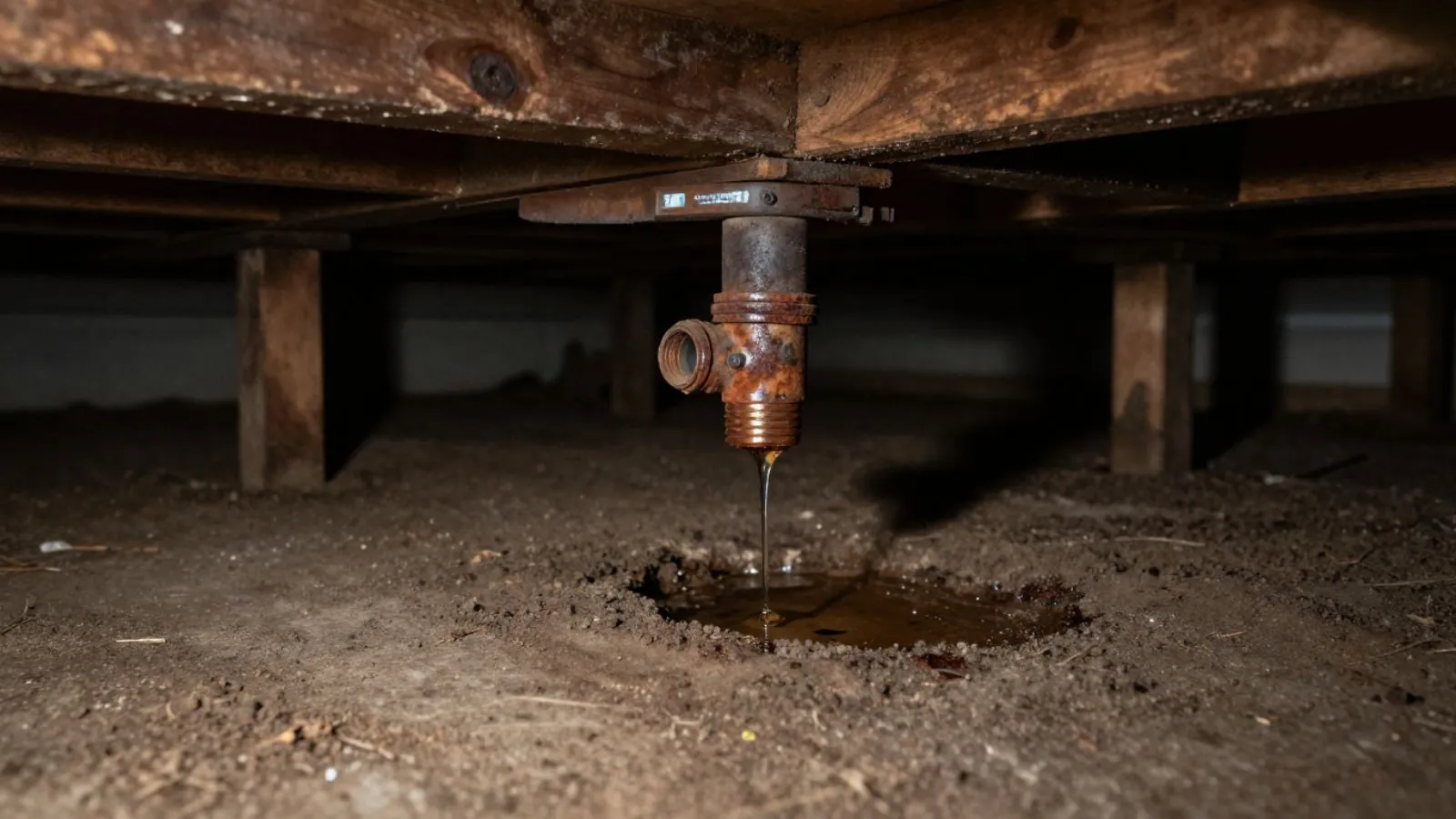
Crawl space water damage cleanup in Rockville Centre covers standing water, wet insulation and damp framing under the house. Crawl spaces are less common here than full basements, but houses with additions, porches and older low sections can have them.
The water usually comes from a plumbing leak, poor drainage or groundwater after a storm. Call our 24/7 line and we will explain how to deal with the water and what to check above.
Why a wet crawl space is a problem
Joists, subfloor and insulation sit close to the water. Wood that stays damp can grow mold and, over time, lose strength.
Damp air in a crawl space also moves upward. A musty smell in the first-floor rooms or cold, soft floors over a wet crawl space are common signs.
Where the water comes from
Plumbing leaks are the first thing to check. A dripping supply or drain line can wet one spot for months.
After heavy rain, surface water and a high water table can push moisture through the foundation. The September 29, 2023 storm put more than six inches of rain on the South Shore, and low ground under a house will hold some of it.
Water under the house? Call and we will explain how to deal with it. Call (516) 845-9582
What we do in a crawl space
- Pump or extract standing water with equipment sized for tight space.
- Remove wet insulation and any debris that holds moisture.
- Dry the joists and subfloor with air movers and dehumidification.
- Check for mold signs and treat surfaces when needed.
- Recommend drainage or vapor barrier fixes for a contractor to handle.
Crews work in protective gear because crawl spaces can hold dust, droppings and mold. If the water is from a storm, the cleanup shares steps with flood damage cleanup.
Preventing a wet crawl space
- Fix plumbing leaks promptly.
- Make sure gutters and downspouts carry water away from the foundation.
- Keep soil sloped away from the house.
- Use a vapor barrier over bare ground where practical.
- Check the space after major storms.
Encapsulation and sump systems are installed by foundation contractors. We can tell you what the moisture readings show, but we do not install those systems.
What affects the cost
| Factor | Effect |
|---|---|
| Water depth | Deeper water takes longer to remove. |
| Access | Tight spaces slow every task. |
| Insulation | Wet insulation is removed and replaced. |
| Wood damage | Rot may need a carpenter. |
| Drying days | Equipment runs until framing reads dry. |
Policies often exclude groundwater and seepage, so check yours before assuming coverage. Want your real number? Call (516) 845-9582.
Why crawl space moisture matters upstairs
The crawl space is the lungs of a house. Air rises through floor gaps, so damp air below ends up in living areas. A wet crawl space can show up as cupped hardwood, a musty smell and cold floors.
Insulation under the floor is often the first casualty. Wet fiberglass sags and loses its value, and it holds water against the subfloor. Removing and replacing it is common after a significant wetting.
Standing water may come from a plumbing leak, groundwater or poor grading around the foundation. Fixing the cause is as important as drying.
Wear protective gear and watch for wiring. Do not enter a crawl space with standing water near electrical lines. Call and describe what you see.
Standards behind the work
The industry reference for this kind of work is ANSI/IICRC S500, the standard for professional water damage restoration. Whoever you hire, ask how it applies to your job and ask to see the moisture readings that show the structure is dry.
Questions about crawl space water damage in Rockville Centre
Yes. Wet joists and insulation can leave the floor above cold, springy or warped. A moisture reading under the house confirms the cause.
Only for a quick look with proper protection. Standing water near wiring is dangerous, and dust or mold can irritate lungs.
No. We dry the space and advise what the readings show. A foundation or crawl space contractor installs barriers and drainage.
Active water flowing into the space is urgent. A damp space with no flowing water is still a priority because mold can start quickly.
We look for visible growth and moisture signs. For larger areas, New York requires licensed mold professionals, and we explain the process.
Not if water is near wiring or the space is confined and dark. Call for help instead.