
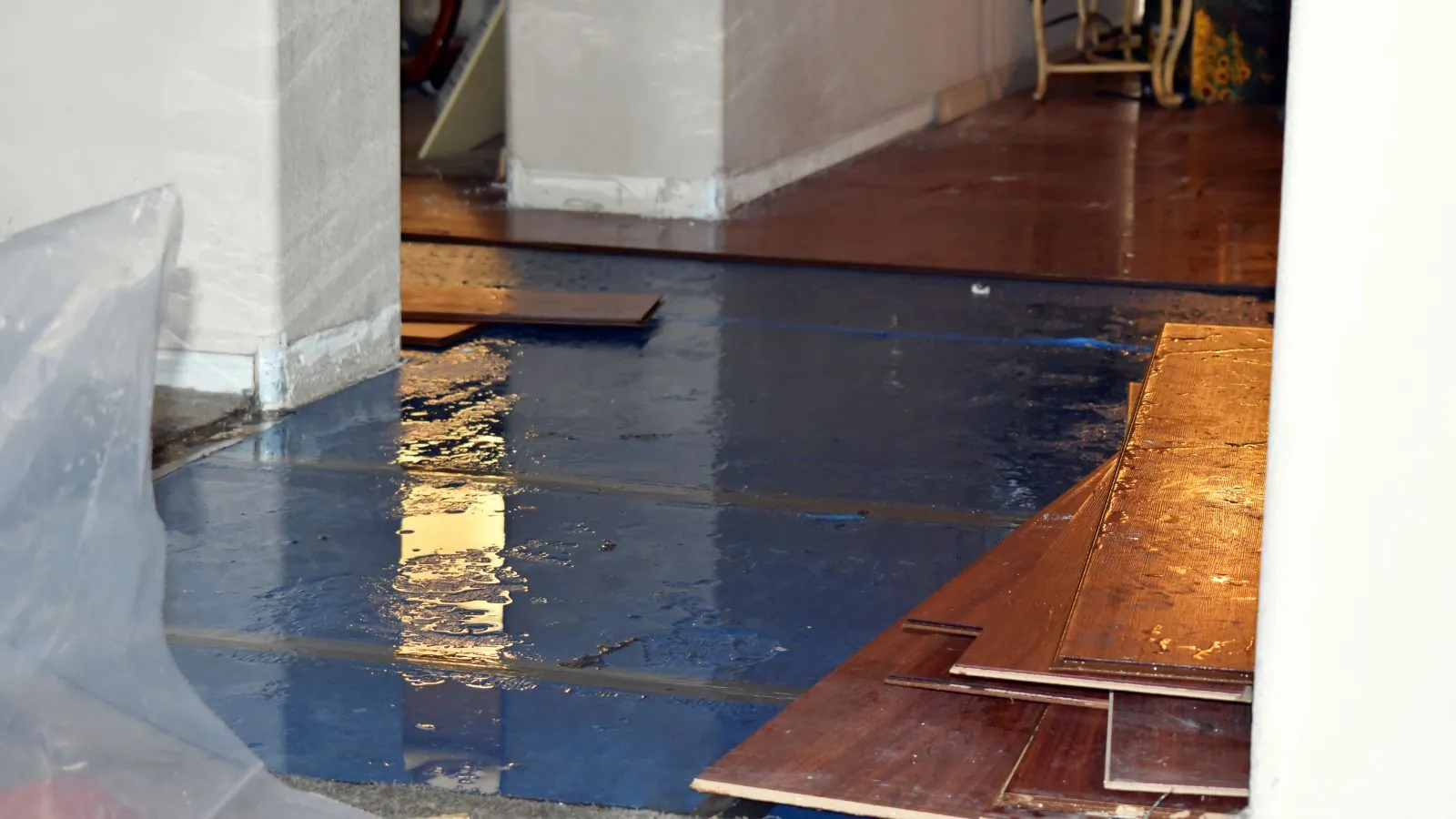
Emergency slab leak water damage in Rockville Centre is about the water a hidden line has already put into your floor. A leak under or in a concrete slab can run for weeks before the signs show, and by then the flooring above it may be soaked.
Close the main valve to confirm the water stops, then call our 24/7 line. A plumber finds and repairs the line. We dry the structure and explain what the readings mean.
Signs of a leak under the floor
The signs are subtle. You may hear water running when every tap is off, feel a warm patch on a floor, see a damp spot on tile or carpet, or notice your water bill jump with no change in use.
A few simple checks narrow it down. If the water meter keeps spinning with everything off, or the reading changes overnight, there is a leak somewhere between the meter and the fixtures.
Safety first: if water is coming up through the floor near outlets or an electrical panel, stay out and call 911 or the utility. Close the main valve and turn off power to the area only if you can do it from dry ground.
What a slab leak does to a house
Water under a slab moves through cracks and joints and rises into flooring, baseboards and the bottom of walls. It can also wash soil away from the slab, which is a structural concern for a plumber and an engineer to judge.
Carpet, wood and laminate over a slab leak often swell or buckle. Tile may crack or grout may stain. A moisture meter reads how far the water traveled.
Hearing water with every tap off? Close the main valve and call. Call (516) 845-9582
How this fits a Rockville Centre home
Many houses in the village have basements, so slab-on-grade floors are less common than in warmer states. You will find them in additions, garages and some ranch-style homes, and a leak in one of those areas follows this pattern.
If your water bill jumped and you have not found a surface leak, read appliance leak water damage for the checks that come before assuming it is under the floor.
How we handle the drying
- Confirm moisture with meters and thermal imaging after the plumber has located the leak.
- Extract any water that came up through the floor.
- Lift or remove flooring that cannot dry in place.
- Dry the slab surface and the wall bottoms with air movers and dehumidification.
- Check readings until the structure is back to normal.
Plumbers use leak detection tools to find the break and may tunnel, break the slab or reroute the line. Drying runs alongside that work. See structural drying for how readings guide the schedule.
What affects the cost
| Factor | Effect |
|---|---|
| Leak duration | Long leaks soak more flooring and framing. |
| Flooring type | Tile is more forgiving than wood or carpet. |
| Slab access | The plumber may need to open the slab, which is a separate job. |
| Area | More rooms mean more equipment. |
| Mold risk | Wet carpet and wood for weeks may need further work. |
Coverage for slab leaks varies widely by policy, so read the water damage and plumbing language and ask your insurer before work begins. Want your real number? Call (516) 845-9582.
Standards behind the work
The industry reference for this kind of work is ANSI/IICRC S500, the standard for professional water damage restoration. Whoever you hire, ask how it applies to your job and ask to see the moisture readings that show the structure is dry.
Questions about leaks under the floor
Yes. Our line is answered 24/7 and we aim for same-day response when a crew is available.
Warm spots, running water sounds with everything off, a moving water meter and a sudden rise in your water bill are the common signs.
A hot water line leaking under the slab can warm the concrete above it. It is a reason to call a plumber promptly.
It can be. A leak that runs day and night adds up quickly, and our guide to sudden water bill jumps explains how to check.
No. A plumber finds and fixes the line. We dry the structure and handle the water damage.