
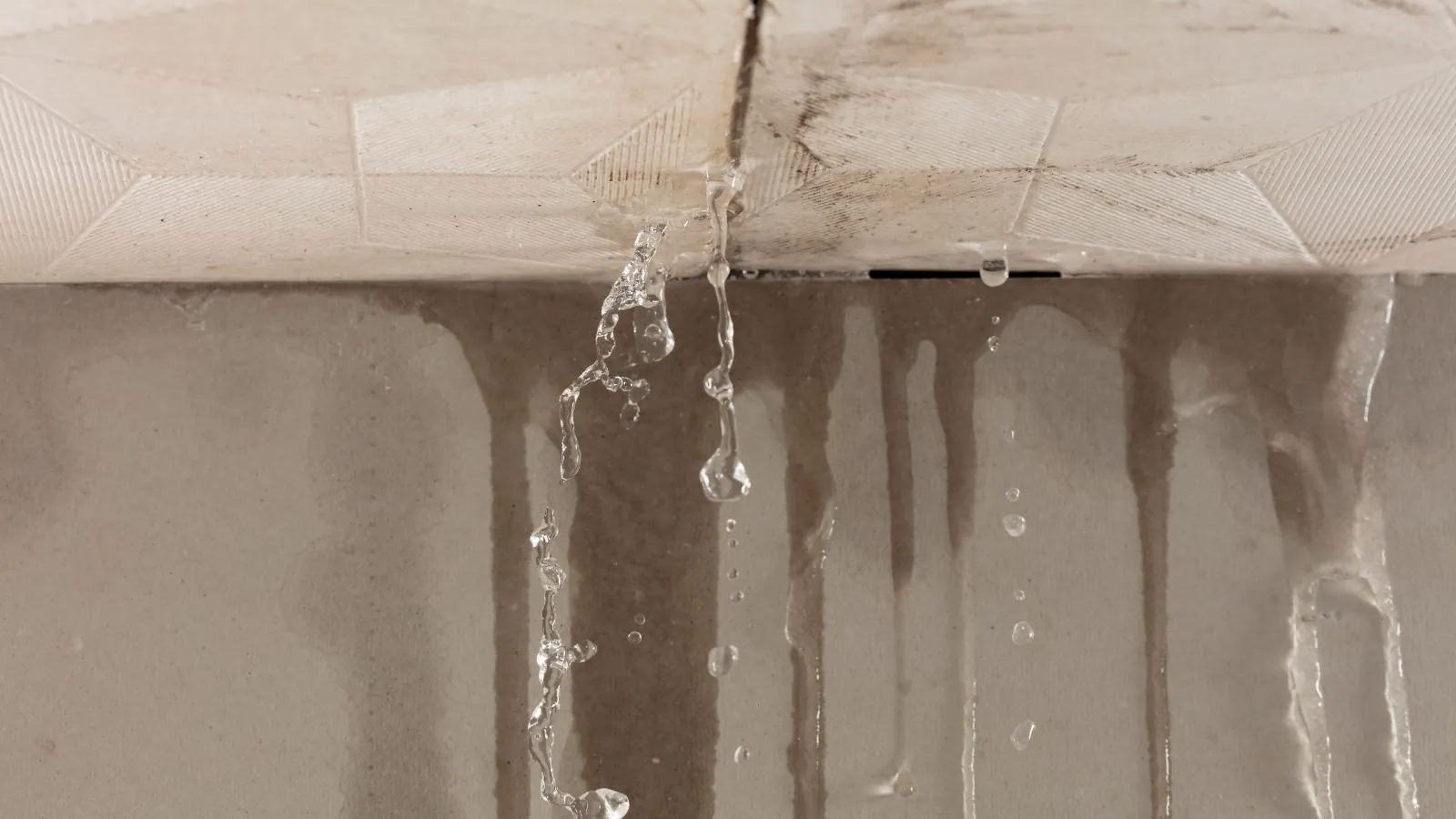
Emergency ceiling water damage repair in Rockville Centre starts when you see a brown ring, a bubble in the paint or water dripping from a light fixture. The ceiling is only where the water finally showed itself. The source may be a bathroom above, a supply line in the joists or a leak in the roof.
Call our 24/7 line, move furniture from under the stain and place a bucket where it drips. If the ceiling is bowing, do not stand beneath it.
When a leaking ceiling is an emergency
A ceiling that is dripping, bulging or sagging is an emergency. Wet drywall and plaster are heavy, and a bulge can fail without much warning.
A small ring that does not grow can wait for a daytime visit, but it still needs a cause. Old stains that look dry may hide a slow leak that returns every time it rains or someone takes a shower.
Safety first: if water is coming through a light fixture or ceiling fan, stay away and turn off the breaker only if you can reach it dry. Poke a small hole to relieve a bulge only if you can do it from a safe distance into a bucket.
Finding where the water starts
We trace the water with a moisture meter and thermal camera. A ceiling stain right under a bathroom usually means a supply line, drain or tub seal. A stain along an exterior wall after rain points to the roof, flashing or gutters.
This page also covers roof leaks that reach the ceiling. We dry and repair the interior, while a roofer fixes the roof itself, and the two jobs should be timed together so the new ceiling is not wet by the next storm.
Ceiling dripping or bulging? Move out from under it and call. Call (516) 845-9582
How the ceiling is repaired
- Stop the water at its source or place a temporary cover over the leak.
- Remove wet or sagging drywall, plaster or insulation.
- Dry the joists and cavity with air movers and a dehumidifier.
- Confirm readings are normal before any new board is hung.
- Patch, texture and prime the ceiling, then paint.
Plaster ceilings in older homes need a different approach than drywall, and the right repair depends on how much of it is detached. A wet attic or insulation layer above the ceiling may also need drying, similar to the steps in wall and drywall water damage repair.
Ceiling leaks in Rockville Centre homes
Many houses in Rockville Centre have two stories with a bathroom directly above a first-floor ceiling. A failed supply line or toilet seal on the upper floor is a common cause, so check the wet area above before blaming the roof.
Rockville Centre residential repairs generally need a permit from the building department, and roofing contractors in Nassau County need a Home Improvement License. Ask a roofer for the license number before you sign.
What affects the cost of a ceiling repair
| Factor | Effect |
|---|---|
| Source of the leak | A plumbing leak is fixed by a plumber and a roof leak by a roofer, and each is billed separately. |
| Ceiling material | Plaster costs more to repair than drywall. |
| Area affected | A small patch costs less than a full ceiling. |
| Insulation | Wet insulation above the ceiling has to be removed and replaced. |
| Finish work | Texture, primer and paint are the last step. |
Many policies cover sudden leaks but not long-term seepage or worn roofing, so read yours before the work starts. Want your real number? Call (516) 845-9582.
Standards behind the work
The industry reference for this kind of work is ANSI/IICRC S500, the standard for professional water damage restoration. Whoever you hire, ask how it applies to your job and ask to see the moisture readings that show the structure is dry.
Questions about ceiling water damage repair in Rockville Centre
Yes. Our line is answered 24/7 and we aim for same-day response when a crew is available. We will tell you how to catch the water until then.
No. In a two-story house, a bathroom or kitchen above is as likely as the roof. A meter and thermal camera find the source before anything is opened.
Not until the cause is fixed and the cavity is dry. Paint over a wet ceiling traps moisture and the stain returns.
No. A roofer repairs the roof. We handle drying and the interior ceiling work, and we coordinate timing with the roofer.
Drying usually takes days, then patching and paint follow. We give you a plan based on the readings.