
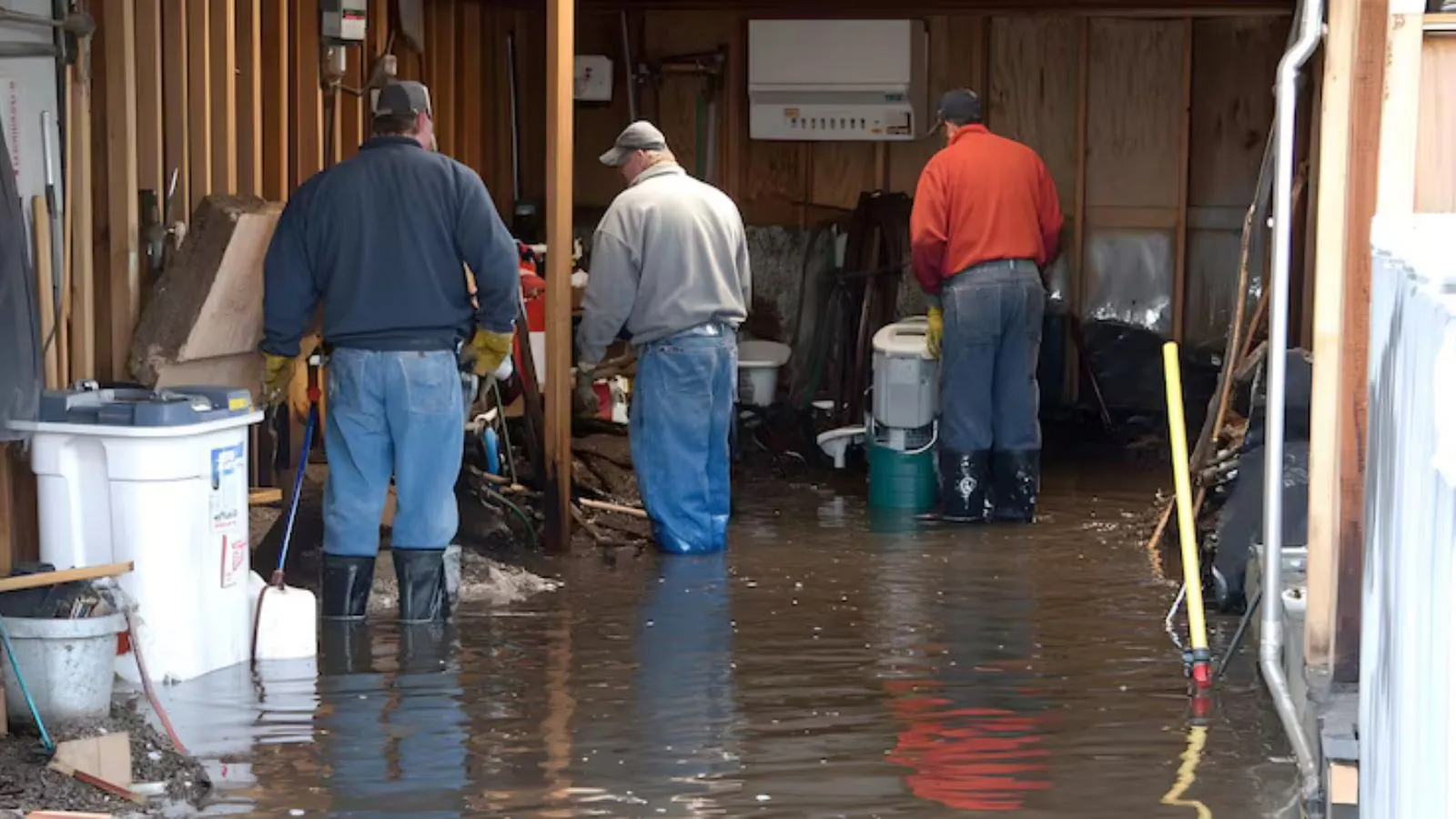
Cleaning up water damage is a race against time and bacteria. Clean water from a pipe can turn into a bigger problem if it sits in carpet, pad and drywall for two days, and mold can start to grow in damp materials in that window.
This guide covers what you can safely do yourself in the first 48 hours and what to leave to a trained crew. The key idea is to stop the source, stay safe and start drying quickly.
Hour one: stop the source and stay safe
Shut off the water at the main valve if the source is a pipe or appliance. If the water is from outside, stay out of it and wait for guidance.
Watch for electrical risk. Do not stand in water near outlets, and turn off the breaker for a wet area only if you can reach the panel dry.
Hours one to six: remove and document
- Take photos and video before anything is moved.
- Mop or use a wet vac rated for water on small spills.
- Lift furniture off wet carpet and put foil or blocks under the legs.
- Remove soaked rugs and loose items.
- Open interior doors and run fans to move air.
Do not use a household vacuum on water, and do not use heat to speed drying. Heat can cause wood to crack and can pull moisture deeper into walls.
Water already two days old? Call now so drying can start. Call (516) 845-9582
Day one: find what is still wet
The surface can look dry while the inside is not. Drywall, subfloor, insulation and the bottom of walls hold water longest.
A moisture meter and thermal camera find hidden water. This is the point to call for professional help if more than a small area is wet, since water extraction and drying equipment do what household fans cannot.
Day two: decide what stays and what goes
| Material | Often |
|---|---|
| Carpet over clean water, caught fast | Dried in place or lifted and reinstalled. |
| Carpet pad | Usually replaced. |
| Drywall that is soft or stained | Cut out and replaced. |
| Solid wood furniture | Often dried and saved. |
| Particleboard or cardboard | Usually discarded. |
| Anything touched by sewage or flood water | Usually discarded. |
The water category sets the plan. Clean supply water leaves more options than gray or black water.
When to stop and call
Call a professional if the water is more than a small spill, if it came from outside or a drain, if it soaked a wall or ceiling or if you smell mustiness. The sooner drying starts, the more can be saved.
Our burst pipe water damage page explains the plumbing-source case, and if a flood is involved, we explain what changes.
Hour by hour: what changes as water sits
In the first hour, water is mostly on the surface and moves with gravity. It runs under baseboards, down through floor seams and into the ceiling below. Extraction at this point removes most of the volume before it soaks in.
By the end of the first day, water has wicked into drywall, pad and wood. Porous materials hold moisture long after the puddle is gone, and humidity in the room rises. Drying now takes equipment, not just towels.
Past 48 hours, microbial growth becomes a real possibility on damp organic materials. Odors start, finishes lift and wood begins to cup. The longer a house stays wet, the more material has to be removed instead of dried.
What not to do in the first two days
- Do not use a household vacuum on water.
- Do not turn on ceiling fixtures under a wet ceiling.
- Do not walk on a sagging ceiling or bowed floor.
- Do not close up wet rooms and leave.
- Do not rely on a few box fans to dry a whole structure.
Fans alone move humid air from one place to another. Without dehumidifiers and a way to vent moisture, the water you remove from the floor ends up in the walls. That is why professional drying pairs air movers with dehumidifiers and measures progress, as described under structural drying and dehumidification.
If the water is gray or black, such as from a washing machine drain or a sewer line, keep children and pets out and call for help. Those losses need protective steps and more careful cleaning.
What to save, what to toss and what to photograph
Sort belongings by how they react to water. Solid wood furniture, glass, metal and hard plastics usually clean up. Upholstery, mattresses, particleboard furniture and paper goods hold water and often cannot be saved after contact with dirty water.
Photograph everything before you throw it away. A list with brand, age and rough value helps with an insurance claim, so write it while the items are still in front of you.
Lift items off wet floors onto foil or plastic blocks. Move important papers to a dry place and, if they are wet, freeze them in sealed bags to buy time until they can be handled.
Standards behind the work
The industry reference for this kind of work is ANSI/IICRC S500, the standard for professional water damage restoration. Whoever you hire, ask how it applies to your job and ask to see the moisture readings that show the structure is dry.
What this means in Rockville Centre
Rockville Centre supplies its own water from wells that draw on the Magothy aquifer, through more than 70 miles of mains. If water comes from the street side of your meter, call the village water department at (516) 678-9301.
If the water came from the street or a storm, it is contaminated, and the steps differ. After storms like September 29, 2023, nearby Oceanside and East Rockaway saw the same pattern of basement water.
Local questions about the first 48 hours
Mold can start in damp materials within a day or two, which is why the first 48 hours matter.
It helps with a small spill. For wet walls and floors, controlled drying with dehumidifiers is faster and more reliable.
It starts clean but picks up dirt, so wash well and wear gloves.
Call the village water department at (516) 678-9301 for a problem on the street side of the meter.
Do not use a household vacuum on water, do not use heat to dry wood and do not throw out damaged items before taking photos.
No. Drying is still possible, but more materials may need removal. The sooner it starts, the more can be saved.