
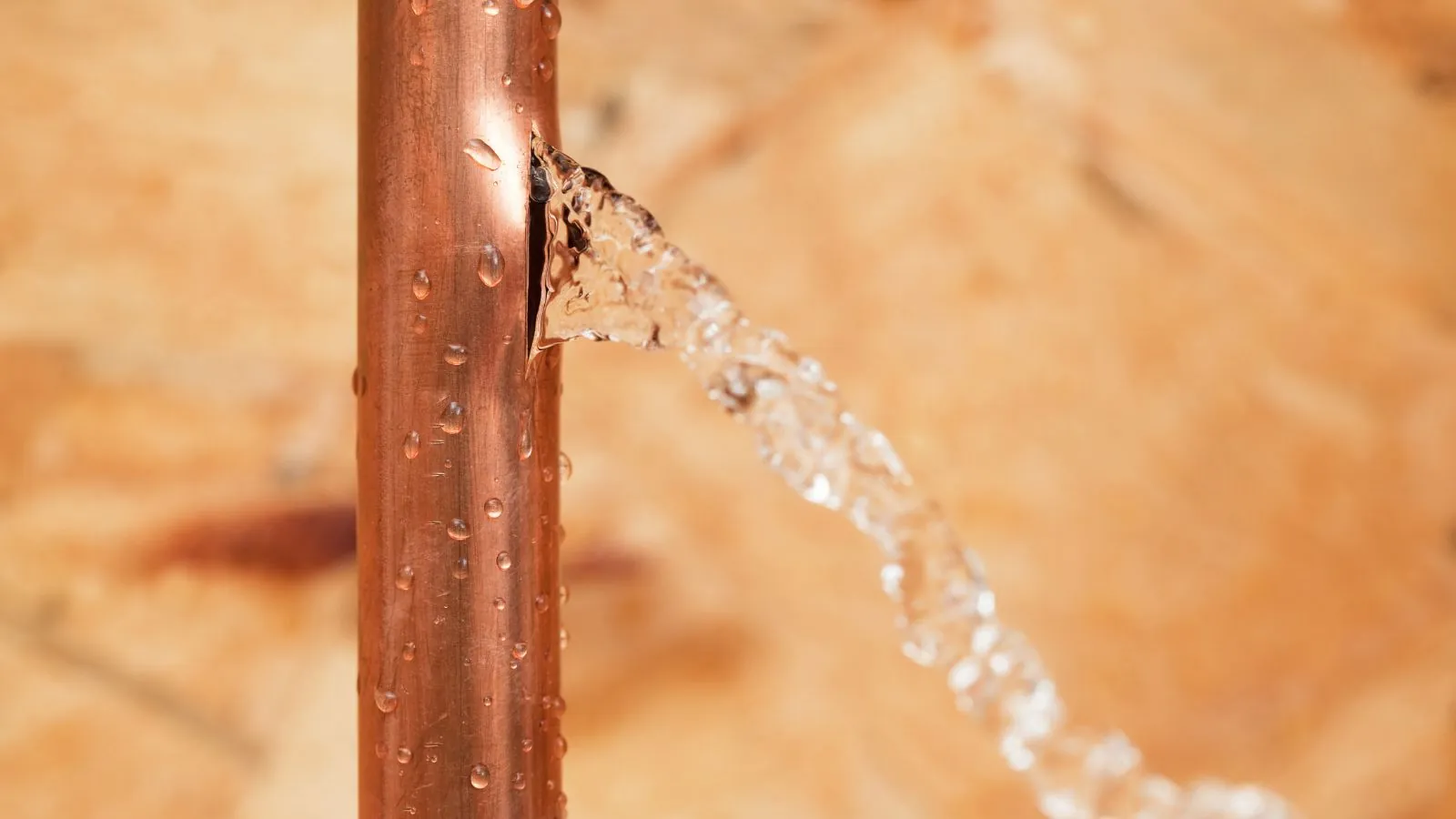
The short answer is that many homeowner policies cover sudden and accidental water damage, such as a pipe that bursts or an appliance hose that fails, and many do not cover flood or damage that built up slowly. Your policy wording decides, so this guide is a map of what to check, not a promise of coverage.
We are a water damage restoration company, not an insurer or an adjuster, so we cannot say what your policy pays. We can explain the usual patterns so your questions to your insurer are sharper.
Sudden versus gradual damage
Policies usually draw a line between damage that was sudden and accidental and damage that seeped over time. A supply line that splits and floods a kitchen is sudden. A pipe fitting that drips behind a wall for months is gradual.
Insurers often treat the gradual kind as a maintenance issue. That is why a slow leak that stains a ceiling can be denied while a burst pipe in the same spot is paid.
Flood is a separate coverage
The New York State Department of Financial Services notes that standard homeowner policies do not cover flood. Flood coverage is sold separately, and the National Flood Insurance Program is one source.
The same department notes that water back-up coverage may be available as an endorsement, which matters for sewer and drain backups. Ask your agent whether you have it, because it is not always included.
Water in the house right now? Stop the source and call, then call your insurer. Call (516) 845-9582
A quick map of common causes
| Cause of the water | How it is often treated |
|---|---|
| Burst pipe or failed supply line | Often covered if sudden, though the pipe itself may not be. |
| Appliance failure | Often covered if sudden, and often not if it leaked for months. |
| Roof leak after a storm | Often covered if the storm made the opening, and often not if the roof was worn out. |
| Flood from outside water | Not covered by a standard policy and needs flood coverage. |
| Sewer or drain backup | Often excluded unless you added water back-up coverage. |
| Slow seepage or poor maintenance | Usually excluded. |
These are patterns, not rules. Read the exclusions in your own policy and ask your agent to explain anything unclear.
What helps a claim
- Stop the source and prevent more damage, which most policies require.
- Photograph and video the damage before cleanup, as the state advises.
- Keep damaged items until your insurer says you can discard them.
- Save receipts for emergency repairs and drying.
- Call your insurer promptly, and ask what it needs before work begins.
The drying and mitigation step is often treated as a covered emergency measure when the loss itself is covered. Your insurer can confirm how it handles that and whether you need prior approval.
Why the cause of the water decides coverage
Insurers look at how the water arrived, not just that the house is wet. A pipe that bursts without warning is usually treated very differently from water that seeps in slowly over months. The first is often called sudden and accidental, and the second is often called maintenance.
That distinction explains most denials. A claim for a slow drip under a sink can be turned down because the policy expects homeowners to catch and fix small leaks. A claim for a split supply line that flooded a kitchen overnight is more likely to be considered.
Read the wording of your own policy, because forms differ. The sections to find are the list of covered perils, the exclusions and any endorsements added after you bought it.
What to do before you call the insurer
- Stop the water and protect the property from more damage.
- Take photos and video of every wet area before cleanup.
- List damaged items with a rough age and value.
- Keep damaged materials until the insurer says you may discard them.
- Keep receipts for emergency work, since many policies expect reasonable steps to limit loss.
Drying work is usually part of limiting the loss. Starting water extraction early often reduces what has to be replaced, and good records of that work make a claim easier to explain.
You can call your insurer and a restoration company in the same hour. The two calls do not compete, and the earlier the water comes out, the smaller the claim tends to be.
Questions to put to your insurer
- Is this loss treated as sudden and accidental?
- Does my policy cover the cost to tear out and replace the part of the system that failed?
- Is water back-up from a drain or sump covered by an endorsement?
- What is my deductible for this type of loss?
- What documents do you need from me and by when?
Write the answers down with the date and the name of the person you spoke with. The wording of your own policy always controls, so ask for the relevant pages if the answers are unclear.
What this means in Rockville Centre
The Census Bureau reports that 74.5 percent of housing units in Rockville Centre are owner-occupied, with a median owner-occupied home value of $796,100. At those values, a gap in coverage is expensive, so it is worth checking your limits and endorsements every year.
Nassau County also saw the September 29, 2023 storm, when nearby East Rockaway recorded 7.90 inches of rain. A homeowner who assumed flood was covered learned otherwise after a storm like that, so confirm what your policy says before the next one.
If you have standing water now, water extraction is the first step, and our burst pipe water damage page covers the sudden-leak case. Our crews also work in Oceanside and East Rockaway.
Local questions about coverage
Often yes if the break was sudden, though the cost of the pipe itself may not be covered. Check your policy and ask your insurer.
No. The Department of Financial Services notes that standard policies do not cover flood, and flood coverage is separate.
Only if it includes water back-up coverage, which is often an endorsement. Ask your agent.
Do not delay drying. Photograph the damage first and tell your insurer what you are doing.
Renters should look at their own policy, which covers belongings and not the building. Our guide to water damage in a rental explains the split.
Often it does not, because policies tend to exclude long-term seepage. Read your policy and ask your insurer how they treat it.