
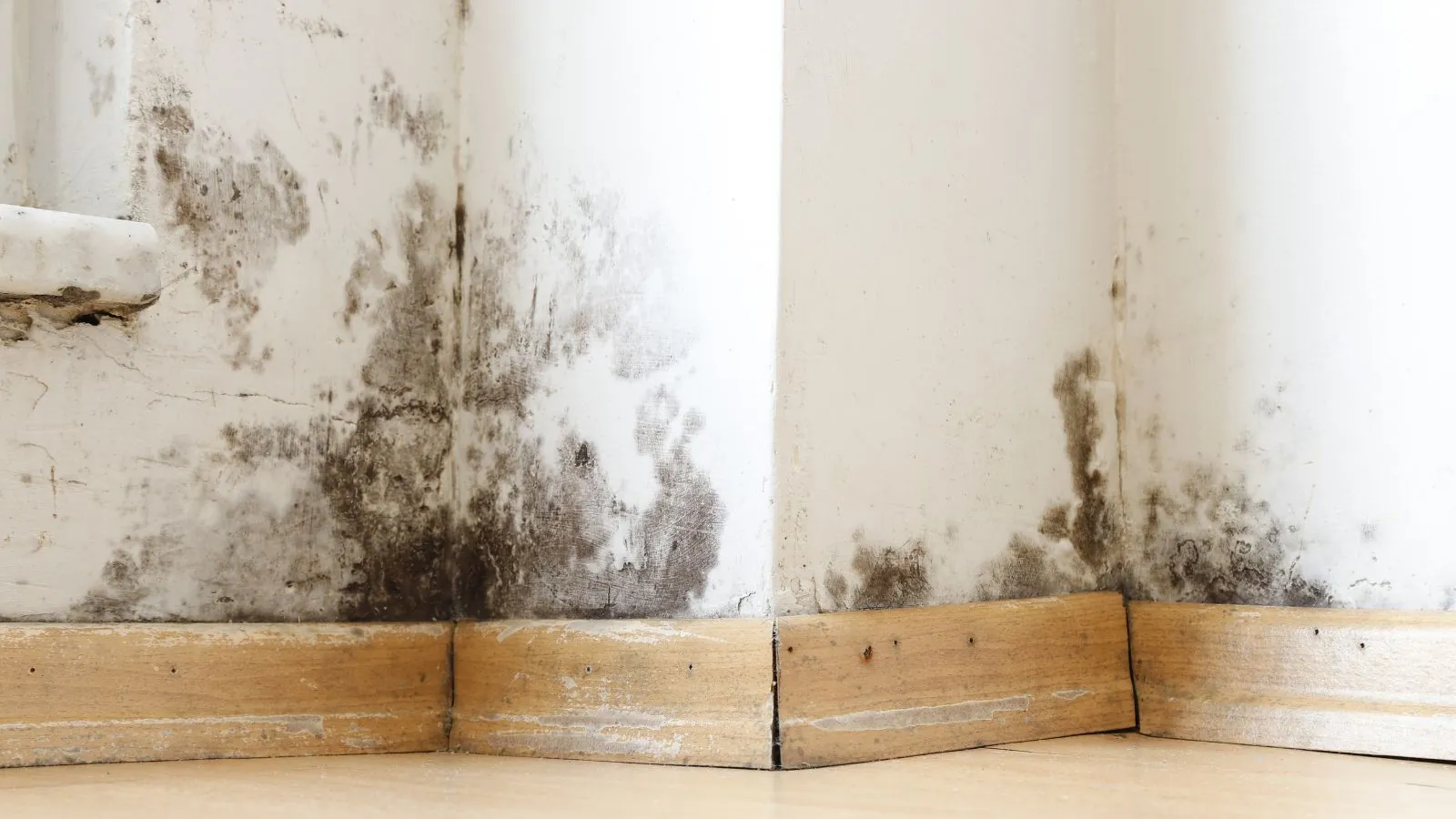
Getting rid of mold in a house follows a simple order. Find and fix the moisture source, remove or clean the affected material and dry the area. If you skip the first step, the mold comes back.
New York sets rules for larger jobs, and a small spot can often be handled by a homeowner with care. Here is how to tell which you have.
Why mold shows up
Mold needs moisture, a food source and time. Drywall paper, wood and carpet pad are all food. A leak, high humidity or a damp basement provides the water.
A dark spot that returns after cleaning usually means the moisture source is still there. Check for leaks, condensation on cold surfaces and poor ventilation.
The 10 square foot line in New York
The New York State Department of Labor licenses mold assessors and mold remediators under Article 32. The licensing applies to jobs over 10 square feet, and the assessor and remediator must be separate parties.
That means a homeowner may handle a small patch, but anything larger should go through licensed professionals. Cleaning a large area yourself can spread spores and may leave the cause in place.
Mold after a leak? Start with the water. Call us to dry it. Call (516) 845-9582
What you can do for a small spot
- Fix the leak or humidity cause first.
- Wear an N95 respirator, gloves and eye protection.
- Wipe hard surfaces with detergent and water, then dry them.
- Discard porous material such as stained ceiling tile or carpet pad.
- Keep the area dry and watch for regrowth.
Do not mix cleaning products, and do not paint over mold. Paint hides it and does not kill it.
What larger jobs involve
- A licensed assessor inspects and writes a plan.
- A licensed remediator contains the area and removes materials.
- Air filtration and HEPA vacuuming clean the space.
- Surfaces are dried and checked.
- The assessor confirms the area is ready for rebuild.
ANSI/IICRC S520 is the industry reference for mold remediation. Our mold remediation page explains how this fits with water damage work, and structural drying covers the dry-out step.
Common hiding places
Mold hides behind furniture on exterior walls, under sinks, inside closets, around windows and in basements. A musty smell without visible growth often means it is inside a wall or under carpet.
A moisture meter finds wet materials without cutting. That can save a wall from being opened for no reason.
Finding out how much mold you really have
Visible mold is often the smaller part of the problem. Growth on a wall surface can mean more behind it, especially where a leak soaked insulation or the back of drywall. A moisture meter and a camera on a probe can show what the eye cannot.
Measure the area before you pick a plan. If the total affected surface is under 10 square feet, a homeowner may clean it. Over that size, New York requires a licensed assessor and a separate licensed remediator.
Also ask where the moisture came from. A cleanup that ignores the source only buys time until the next humid week.
Why mold returns after a surface cleaning
Mold spores are everywhere in indoor air. They only grow where there is moisture and an organic surface to feed on, such as paper facing on drywall, wood, carpet and dust. Scrubbing removes what you can see but leaves the conditions in place.
Returns are common in basements, bathrooms and closets on exterior walls. Humidity above a comfortable range, poor airflow and cold surfaces all contribute. A dehumidifier, a working exhaust fan and repairing leaks are the lasting fixes.
If mold keeps coming back, the cause may be hidden. A leak inside a wall, a roof problem or a bad flashing can feed growth for months. Our basement water damage cleanup page shows how we trace moisture before deciding what to remove.
A room-by-room look at where homes grow mold
| Room | Common moisture source |
|---|---|
| Basement | Groundwater, wet walls, dryer vents and humidity. |
| Bathroom | Steam, weak fans and failing caulk. |
| Kitchen | Sink leaks, dishwasher lines and refrigerator ice lines. |
| Attic | Roof leaks and bath fans venting into the space. |
| Closets on exterior walls | Condensation and poor airflow. |
| Laundry | Washer hoses and unvented dryers. |
Walk through your home with this list and look for stains, smells and soft spots. A moisture meter, which hardware stores sell, gives a quick idea of whether a wall is damp.
What to do after the cleanup
Keep humidity in the house in a comfortable range, and use a dehumidifier in damp areas. A simple hygrometer, which costs very little, shows you the humidity level so you can act before mold returns.
Check the areas you cleaned again in one week and one month. Look for new staining, smell and soft spots. If anything returns, the moisture source has not been solved.
Keep a record of what you found, what you did and when. If you sell or file an insurance claim, the record helps explain the history.
What this means in Rockville Centre
A village historic survey mapped seven possible historic districts north of Lakeview Avenue with more than 870 historic structures, and many Rockville Centre houses are older. Older houses can hold moisture in places a quick look misses, so a meter reading is worth the time.
Nassau County contractors need a Home Improvement License, and mold professionals need state licenses. Ask for both numbers. Our crews also work in Malverne and Hewlett.
Local questions about mold
Bleach is not the best choice on porous materials. Detergent and water on hard surfaces, plus removal of porous materials, is the usual approach.
Measure the visible area and include hidden areas you can reasonably see, such as the back of a drywall panel. If in doubt, ask a licensed assessor.
Drying stops growth, but existing mold still has to be cleaned or removed.
Not necessarily, but older materials like plaster can hold moisture, so a reading helps.
The New York State Department of Labor licenses assessors and remediators under Article 32.
Testing is a decision for an assessor. For small visible spots on hard surfaces, most people fix the moisture and clean. For larger or unclear cases, talk to a licensed assessor.